
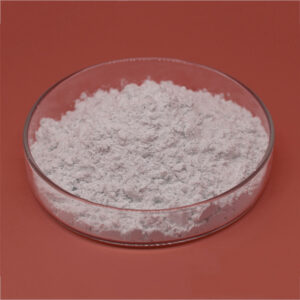
What is “Plate Calcined Alumina”?
“Plate” or “Platy”: Refers to the hexagonal plate-like shape of the individual alpha-alumina (α-Al₂O₃) crystals. This is the defining feature that enables its superior polishing performance (as explained in the previous answer).
“Calcined”: This is a high-temperature thermal treatment process.
A precursor material (often a high-purity aluminum hydroxide or transition alumina) is heated to temperatures typically above 1200°C.
This process drives off volatile components, completes the crystallization into the stable alpha phase, and grows the crystals into the desired plate-like morphology.
“Calcination” is crucial for achieving the final hardness, chemical stability, and controlled crystal shape.
Why Is Specifically Used for Optical Glass in Crystal Displays (LCD Screens)
The combination of properties from this manufacturing process makes it ideal for this demanding application:
| Property | How It’s Achieved | Benefit for LCD Glass Polishing |
|---|---|---|
| High Hardness (~9 Mohs) | Formation of stable alpha-alumina phase during calcination. | Effective material removal rate. |
| Controlled Platelet Morphology | Precise control of calcination temperature, time, and atmosphere. | Smooth shearing/cutting action, leading to ultra-low surface roughness and minimal sub-surface damage. |
| High Chemical Purity (≥99.99%) | Use of pure precursors and controlled calcination to avoid contamination. | Prevents staining, ionic contamination, or haze on the sensitive glass surface. |
| Uniform Particle Size Distribution | Post-calcination classification and milling (if needed). | Ensures consistent, predictable polishing results and a scratch-free finish. |
Application Flow in LCD Manufacturing:
Substrate: Large, thin sheets of alkali-free display glass (e.g., Corning Gorilla Glass, Asahi Glass).
Polishing Stage: Used in the final precision polishing step before the glass undergoes coating (ITO) and patterning.
Goal: To produce a surface that is:
Atomically Flat: Ensures uniform cell gap for liquid crystals.
Optically Perfect: Free of scratches, pits, and haze to maximize brightness, contrast, and touch sensitivity.
Clean: Free of embedded particles or metallic contaminants that could disrupt TFT (Thin-Film Transistor) circuitry.