
What abrasive is used for grinding alumina ceramic substrates?
Grinding of alumina ceramic substrates generally adopts acid‑washed and hydro‑classified white fused alumina, namely electro‑fused alumina / carborundum micropowder.
Material matching: White fused alumina features the same α‑alumina base material as alumina ceramic substrates, with similar thermal expansion coefficients. It reduces edge chipping and subsurface micro‑cracks during grinding, and improves substrate yield.
Core Advantages of White Fused Alumina / white fused aluminum oxide / white corundum/WFA
- Low‑impurity control: The acid‑washing process reduces iron impurities. The low‑sodium formula avoids black‑spot contamination on substrates and ensures the process stability of subsequent metallization and coating.
- Hydro‑classification: Oversized particles are strictly screened to lower the risk of surface scratches on substrates and deliver uniform surface texture after grinding.
- Good self‑sharpening performance: Mohs hardness of 9, stable cutting capacity and low grinding heat generation. Suitable for preparing wet‑grinding slurry for double‑side grinding machines.
- Complete specifications: Covering F320 / F400 / F600 / F800 / F1000 / F1200 / F1500,
- 360#, 400#, 500#, 600#, 700#, 800#, 1000#, 1200#, 1500#, 2000#, 3000#, 4000#, 6000# ultrafine powder series. Custom particle sizes are available upon request.
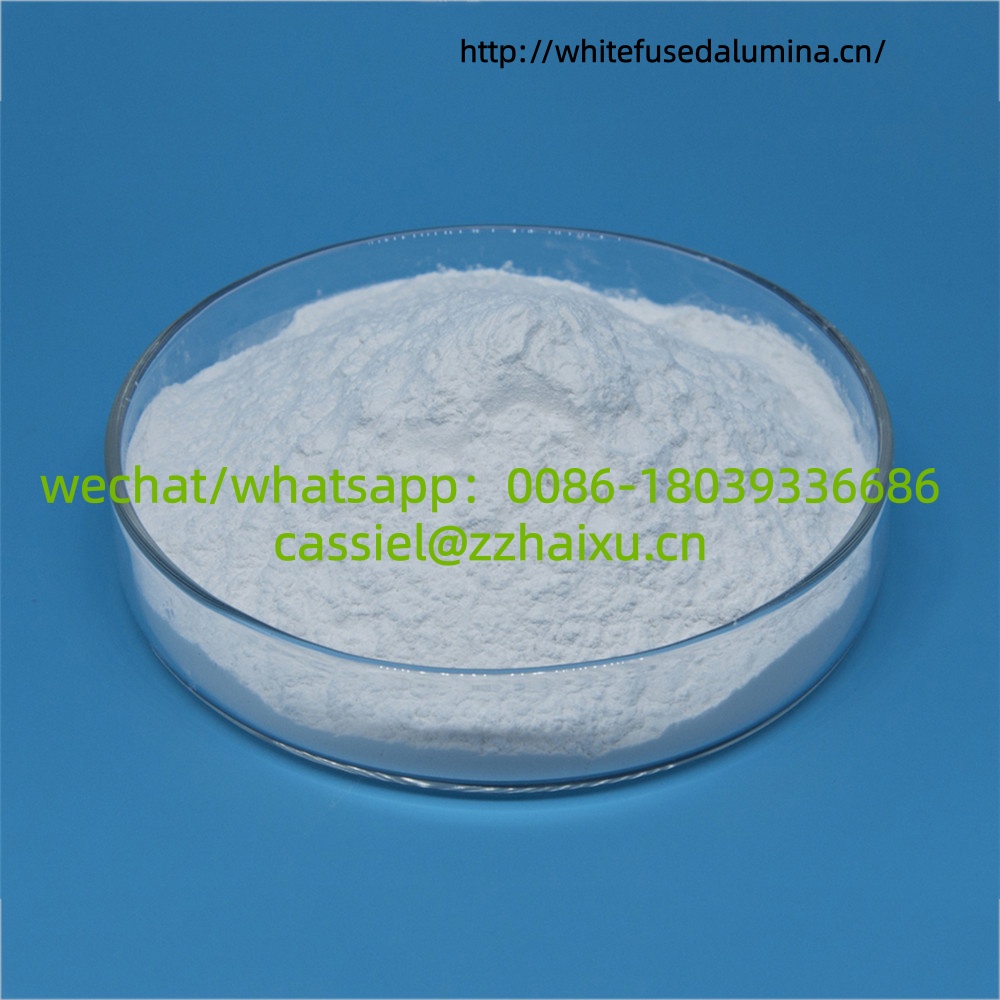
Grit Selection of White Fused Alumina for Alumina Ceramic Substrate Grinding
- Coarse grinding (removing cutting tool marks and large machining allowance): F320, F400, F600
- Medium grinding (planishing and improving parallelism): F800, F1000
- Pre‑fine grinding (pre‑process before CMP mirror polishing): F1200, F1500, W‑series ultrafine white fused alumina
Supplementary Notes
- Selection requirements: Strictly control impurities of Na₂O and Fe₂O₃. Adopt hydro‑classified powder free of oversized particles to prevent substrate scratches and metallization defects.